East Africa
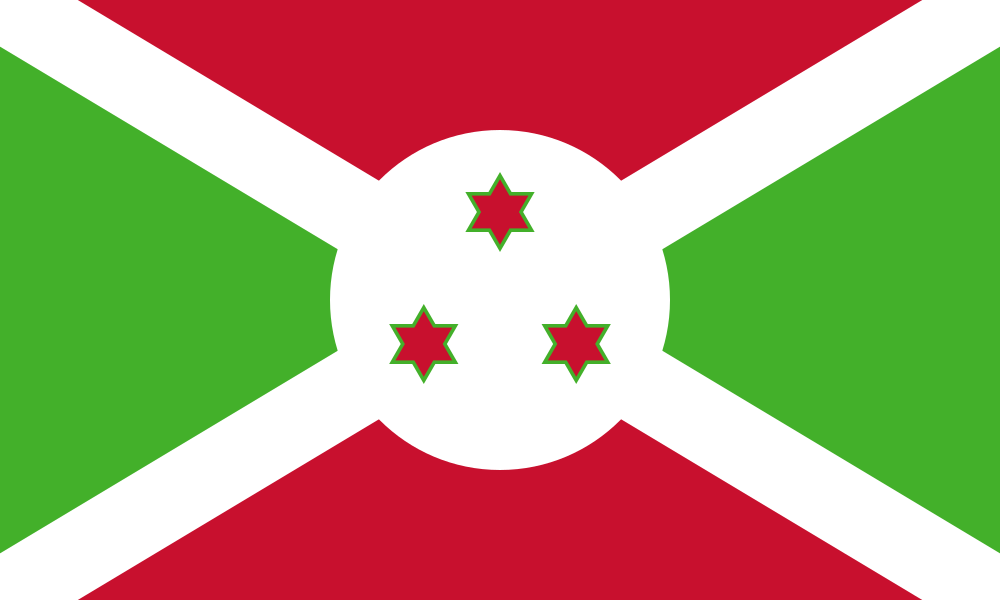
Burundi
Republic of Burundi
- Capital
- Gitega
- Independence
- 1962-07-01
Burundi became independent in 1962 as a monarchy, which was abolished in 1966 by the first of three Tutsi military rulers. The assassination of the first elected Hutu president in 1993 set off a civil war that lasted more than a decade. Since the 2005 elections held under the Arusha peace accords, the former rebel movement CNDD-FDD has governed the country.
No overview written for this section yet.
No overview written for this section yet.
Political timeline 39
-
Parliamentary election
The ruling party won every directly elected seat in the National Assembly. The opposition and the Catholic Church denounced the vote as rigged. Rwasa and other opponents had been excluded from running.
-
Death of Pierre Nkurunziza
Évariste Ndayishimiye, President
Nkurunziza died suddenly, officially of cardiac arrest, two months before the end of his term. The Constitutional Court ruled that the president-elect should take office at once, and Ndayishimiye was sworn in on 18 June 2020.
-
General election
Évariste Ndayishimiye, President
CNDD-FDD candidate Évariste Ndayishimiye, a former general, won the presidency, and the party kept its majority in the National Assembly. Runner-up Agathon Rwasa alleged fraud, but the Constitutional Court rejected his appeal.
-
Constitutional referendum
About 73% of voters approved amendments that lengthened the presidential term from five to seven years and restored the post of prime minister. Nkurunziza then announced that he would not run in 2020.
-
Presidential election
Pierre Nkurunziza, President
Nkurunziza won a third term in a vote boycotted by most of the opposition. UN observers said the election was not free or credible.
-
Parliamentary election
The vote went ahead despite an opposition boycott and calls for a delay from the African Union and the UN.
-
Failed coup by General Niyombare
While Nkurunziza was at a summit in Tanzania, Major General Godefroid Niyombare announced his dismissal. Loyalist forces defeated the plotters within two days.
-
Protests against a third term
Nkurunziza's nomination for a third term, which opponents said violated the Arusha agreement and the constitution, set off weeks of protests in Bujumbura. The Constitutional Court approved his candidacy. Hundreds of people were killed over the following months and several hundred thousand fled abroad.
-
Parliamentary election
Most opposition parties boycotted the vote and the CNDD-FDD won a large majority.
-
Presidential election
Pierre Nkurunziza, President
All opposition candidates withdrew, alleging fraud in the local elections held in May. Nkurunziza was re-elected as the only candidate.
-
Ceasefire with the last rebel group
The government and the FNL (Palipehutu-FNL) of Agathon Rwasa signed a ceasefire in Dar es Salaam. Fighting flared again in 2008, and the FNL finally disarmed and became a political party in 2009, ending the civil war.
-
Nkurunziza elected President by parliament
Pierre Nkurunziza, President
As provided for in the transitional rules, the two houses of parliament elected the first post-transition president. Pierre Nkurunziza was the only candidate.
-
Parliamentary election
The former rebel movement CNDD-FDD won a clear majority, ahead of FRODEBU and UPRONA.
-
Constitutional referendum
About 90% of voters approved a power-sharing constitution with ethnic quotas (60% Hutu and 40% Tutsi in government and the National Assembly, parity in the army).
-
Ndayizeye takes over the transitional presidency
Domitien Ndayizeye, President
Buyoya handed over to Domitien Ndayizeye as planned. In November 2003 the largest rebel group, the CNDD-FDD of Pierre Nkurunziza, signed a ceasefire and joined the government.
-
Transitional government installed
Pierre Buyoya, President
Under the Arusha agreement a transitional government took office. Buyoya, a Tutsi, was to lead it for 18 months with a Hutu vice president, Domitien Ndayizeye, and then hand over to him.
-
Failed coup attempt
Junior army officers opposed to the peace process seized the state radio station in Bujumbura while Buyoya was abroad and announced his overthrow. Loyal troops ended the attempt within hours. A second attempt in July 2001 also failed.
-
Arusha Peace and Reconciliation Agreement
After talks mediated by Julius Nyerere and then Nelson Mandela, the government and most political parties signed an agreement on ethnic power-sharing and a three-year transition. The main Hutu rebel groups, CNDD-FDD and FNL, did not sign and kept fighting.
-
Buyoya returns to power
Pierre Buyoya, President
As violence increased, the army deposed Ntibantunganya and reinstated Pierre Buyoya. Neighbouring countries imposed economic sanctions.
-
Ntaryamira killed in plane shootdown
Sylvestre Ntibantunganya, President
Ntaryamira died together with the Rwandan president when their plane was shot down over Kigali. National Assembly speaker Sylvestre Ntibantunganya became interim president and was confirmed in office in September 1994 under a power-sharing agreement.
-
Cyprien Ntaryamira becomes President
Cyprien Ntaryamira, President
The National Assembly elected FRODEBU's Cyprien Ntaryamira president in January 1994, and he was sworn in on 5 February.
-
Ndadaye assassinated, civil war begins
Sylvie Kinigi, Acting President
Tutsi soldiers killed Ndadaye and other senior officials in a coup attempt that collapsed within days. Massacres of Tutsi and army reprisals against Hutu killed tens of thousands and started the civil war. Prime Minister Sylvie Kinigi led the government as acting head of state until early 1994.
-
Parliamentary election
FRODEBU won a large majority in the National Assembly.
-
Presidential election
Melchior Ndadaye, President
Melchior Ndadaye of the Front for Democracy in Burundi (FRODEBU) defeated Buyoya, becoming the first democratically elected and first Hutu president. Buyoya accepted the result.
-
Multi-party constitution
About 90% of voters approved a constitution that legalised political parties and provided for competitive elections.
-
Charter of National Unity referendum
About 89% of voters approved a charter committing the country to an end to ethnic discrimination.
-
Ntega and Marangara massacres
Hutu attacks on Tutsi in two northern communes were followed by army reprisals that killed thousands of Hutu. Under international pressure Buyoya then appointed a Hutu prime minister and began a national unity policy.
-
Buyoya takes power
Pierre Buyoya, President
While Bagaza was at a summit in Canada, Major Pierre Buyoya overthrew him and set up a Military Committee for National Salvation. Bagaza's conflict with the Catholic Church was one of the stated reasons.
-
Presidential election
Jean-Baptiste Bagaza, President
Bagaza was elected as the only candidate.
-
Parliamentary election
The first legislative election since 1965, with two UPRONA candidates competing for each seat.
-
Constitutional referendum
Voters approved a constitution that made Burundi a one-party state under UPRONA with a directly elected president.
-
Bagaza takes power
Jean-Baptiste Bagaza, President
Deputy chief of staff Lieutenant Colonel Jean-Baptiste Bagaza overthrew Micombero in a bloodless coup.
-
Hutu uprising and the Ikiza
A Hutu rebellion in the south killed many Tutsi. Former king Ntare V, who had just returned, was killed the same night. The army then carried out systematic killings of educated Hutu. Estimates of the dead range from 100,000 to 300,000, and several hundred thousand people fled the country.
-
Micombero abolishes the monarchy
Michel Micombero, President
While Ntare V was abroad, Micombero deposed him and proclaimed a republic with himself as president. UPRONA became the sole party under a Tutsi-dominated military government.
-
Crown Prince deposes Mwambutsa IV
Ntare V, King
The 19-year-old Crown Prince Charles Ndizeye deposed his absent father and was crowned as Ntare V in September. He appointed Michel Micombero prime minister.
-
Failed coup by Hutu officers
Hutu soldiers and gendarmes attacked the royal palace and wounded Prime Minister Biha. Troops under Captain Michel Micombero defeated them. Many Hutu politicians and officers were executed, and the king left for Europe.
-
Parliamentary election
Hutu candidates won a majority of seats in the National Assembly. The king nevertheless appointed a Tutsi prince, Léopold Biha, as prime minister.
-
Assassination of Prime Minister Ngendandumwe
Pierre Ngendandumwe, a Hutu, was shot dead days after being reappointed prime minister. The killing worsened tensions between Hutu and Tutsi politicians.
-
Independence from Belgium
Mwambutsa IV, King
The Belgian-administered trust territory of Ruanda-Urundi was dissolved and Burundi became an independent constitutional monarchy under Mwami Mwambutsa IV. The nationalist party UPRONA had won the 1961 elections, but its leader, Prince Louis Rwagasore, was assassinated in October 1961. The king appointed and dismissed a series of prime ministers.
No overview written for this section yet.
No overview written for this section yet.
No overview written for this section yet.
No overview written for this section yet.
No overview written for this section yet.